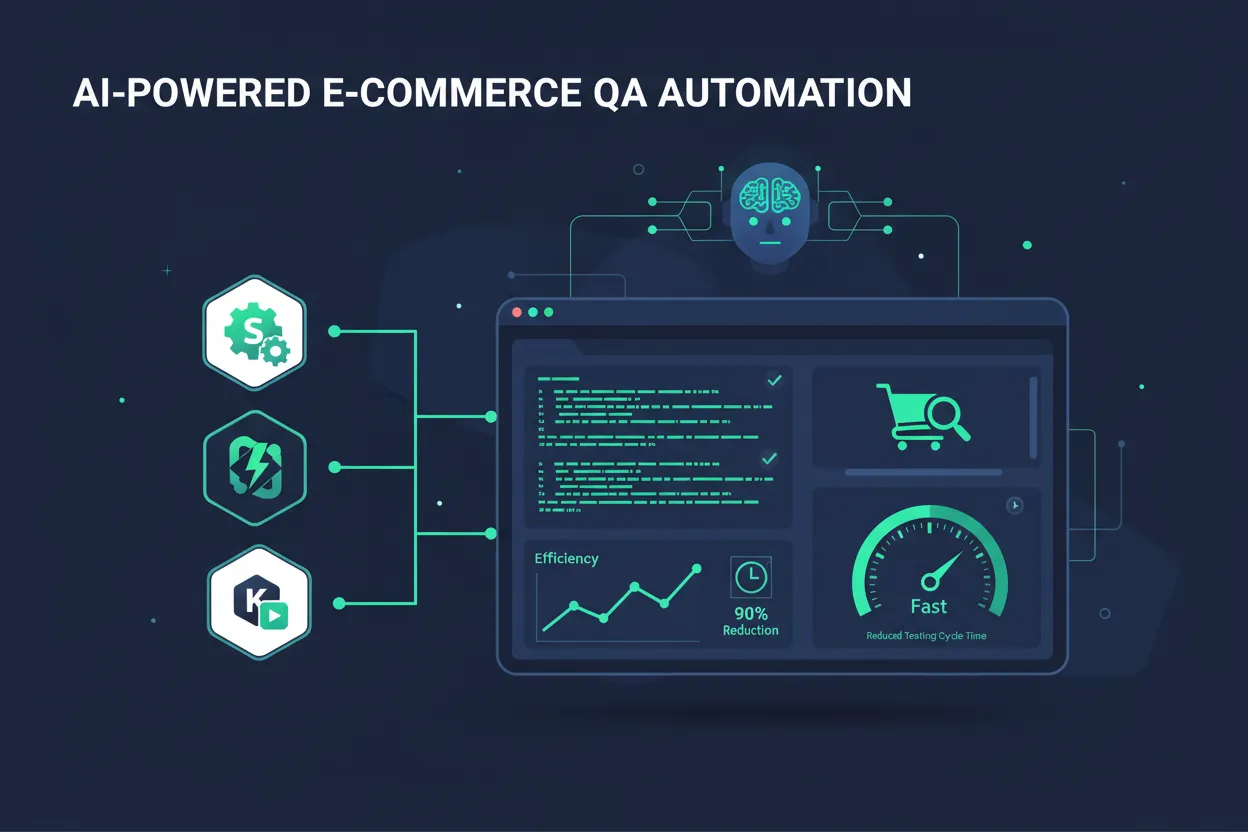
If you’ve ever built automated tests, you know how annoying flaky tests are. They pass sometimes, fail other times, and you can’t always tell why. It wastes hours, breaks trust in your builds, and slows down releases. Google says up to 30% of test failures are flaky—that’s a huge headache for fast-moving e-commerce teams, especially D2C brands trying to scale up and avoid surprises in production. Flaky tests can turn even the best manual testing vs automation testing strategy into a slog, even if you use what is the simplest form of automation first.
Here’s the bright spot: what is ai automation testing is helping teams crush flaky tests for good. AI-powered and even free ai test automation tools use smart algorithms to spot test patterns, fix broken scripts, and shrink flaky failures by up to 70%. At Mommantum, we see D2C brands move from simple script automation all the way to large-scale AI-driven pipelines. Once you automate builds and use self-healing AI, you don’t just test faster—you trust the results and ship with real confidence. So if you’ve been wondering which process requires automated builds and testing to make this work, you’re in the right place.
By the end of this blog, you’ll have a simple playbook for:
- Using AI to boost your test coverage and cut script maintenance.
- Seeing the real difference between manual testing vs automation testing for flakiness and release speed.
- Understanding how what is the simplest form of automation like basic scripts lead to smarter AI-driven tools.
- Knowing exactly which process requires automated builds and testing for solid CI/CD in fast-paced e-commerce.
- Picking practical and even free ai test automation tools to start fixing test headaches right away.
Key Takeaways
- AI automation testing can cut flaky tests by up to 70%. That means more reliable results and less wasted time.
- Simple script-based automation is always the starting point for building smarter, AI-driven testing.
- AI-powered test tools “self-heal” scripts when the UI changes, so you spend up to 30% less time on maintenance.
- Compared to manual checks, AI-based automation is 40-60% faster—with far fewer false alarms.
- AI can spot, flag, and fix flaky tests automatically, making test runs up to 35% more reliable for your team.
- Automated builds and AI testing are must-haves for modern D2C brands who want steady, fast CI/CD releases.
How AI Automation Testing Enhances Test Efficiency and Coverage
Reducing Test Maintenance with AI
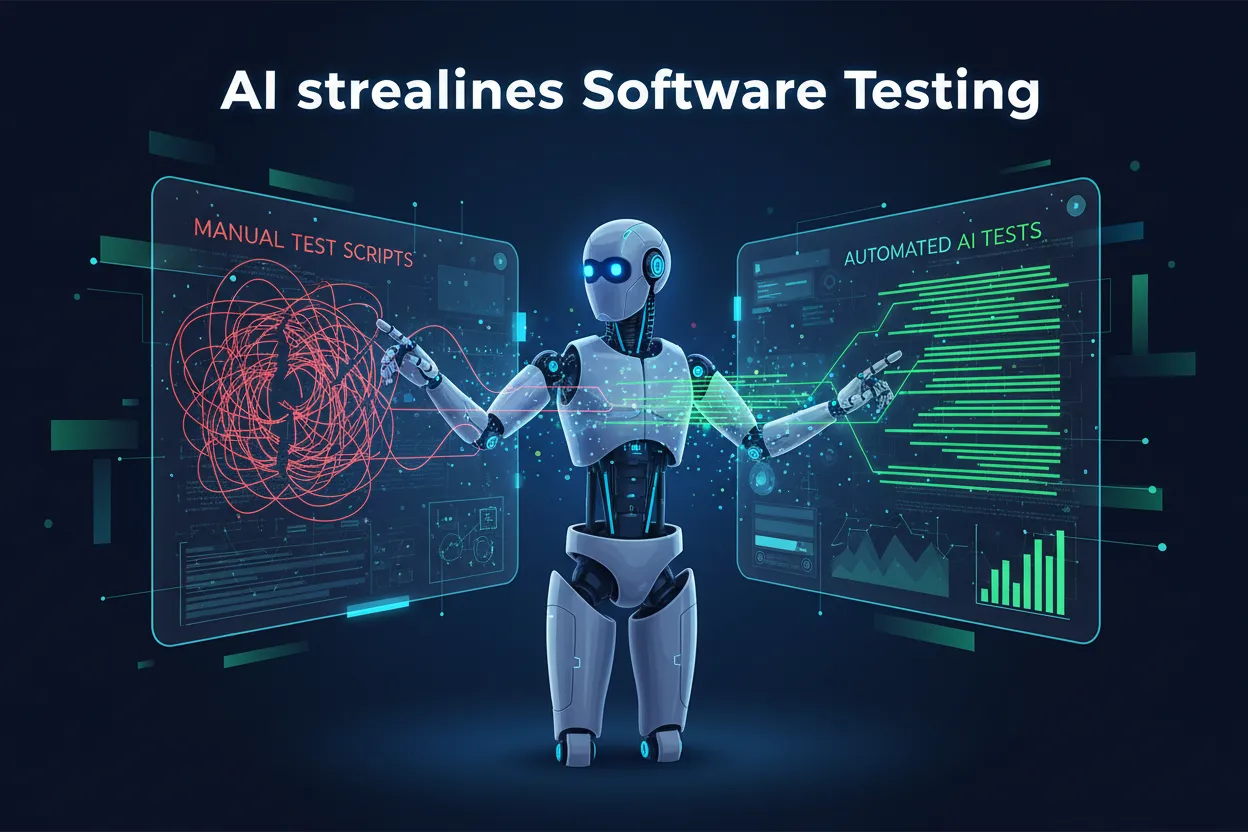
If you’ve ever managed an automation suite, you know updating broken scripts gets old fast. This is where AI and free ai test automation tools come to the rescue. Industry surveys show that teams using AI-powered automation spend 30% less time fixing scripts. Instead of editing every tiny change, AI sees flaky patterns—like timing bugs or data hiccups—and auto-repairs test steps. You don’t have to wonder what is the simplest form of automation anymore, because even basic scripts get smarter with a little AI.
If you’re at a D2C brand where the UI changes all the time, this is gold. IBM found that with smart automation, teams can build new test cases 50% faster. That leaves more time for shipping features, not fighting false failures. Compared to manual testing vs automation testing alone, this is a game-changer. Bottom line: less maintenance, more real QA work.
Expanding Test Coverage through Automation
Want to cover more scenarios but hate growing your pile of brittle scripts? AI-powered frameworks actually help here too. They look at your app’s history, spot where bugs have slipped through before, and automatically add new tests. So you get better coverage, even of edge cases. A D2C brand using Mabl saw their automated coverage double and flaky tests drop by 60%. This kind of scale is just not possible with manual testing vs automation testing alone or by only sticking to what is the simplest form of automation.
Because smart AI “self-heals” new scripts, you don’t need to keep hiring more testers just to keep up. The end result? Wider coverage, steady tests, and confident releases—especially useful during sales or big launches when everything’s changing fast. Worth remembering: let the AI do the heavy lifting and you’ll always stay ahead of the bugs.
Comparing Manual Testing vs Automation Testing in Reducing Flaky Tests
Speed and Accuracy Differences
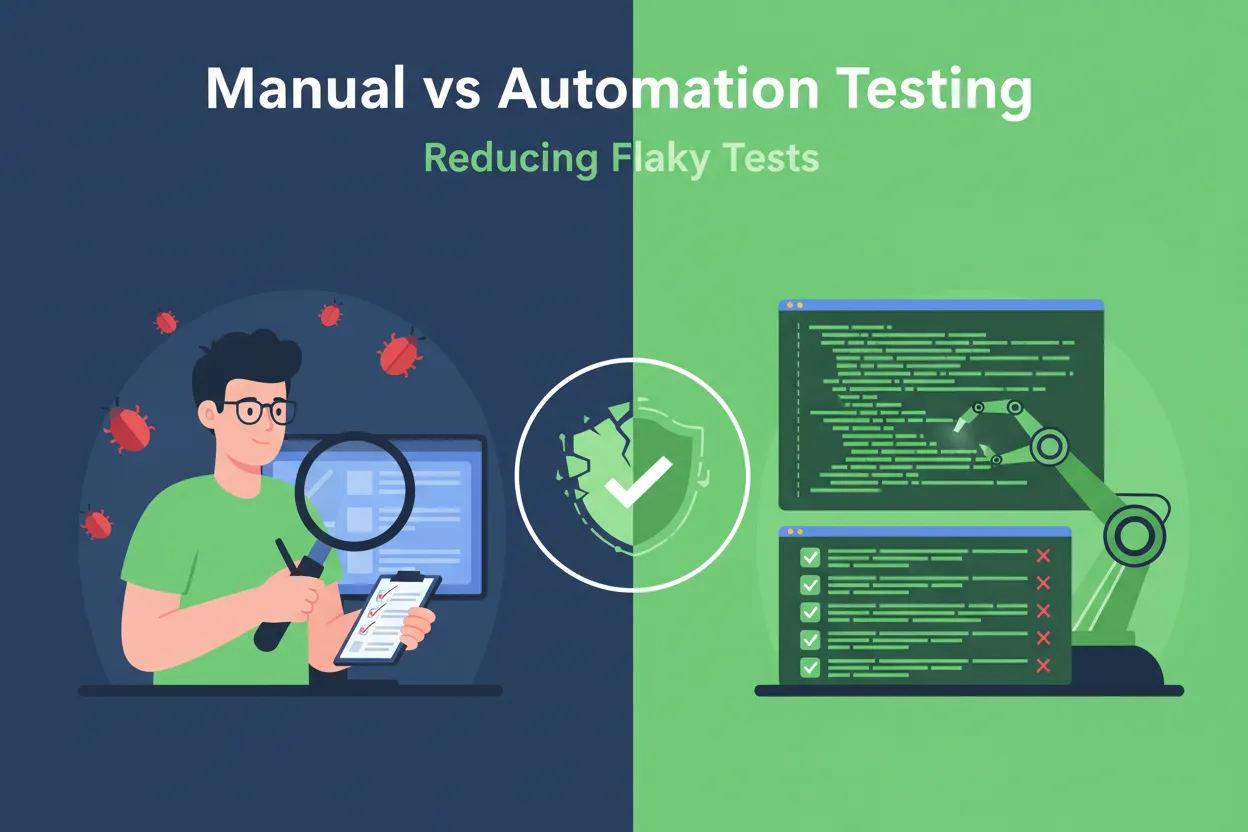
Let’s be honest: manual test cycles are slow, and nobody likes clicking the same buttons a hundred times. Even good testers will sometimes miss flaky bugs, making things worse. Automation, especially with AI, is a different story. You get test runs 40-60% faster, and test results you can actually trust. AI is smart enough to ignore random “noise” failures—something that slows down manual testing vs automation testing every time.
For example, Google found 25-30% of CI failures are just random test flakes. Teams using free ai test automation tools like Testim or Mabl see fewer false positives and more stable pipelines. Even if you started with what is the simplest form of automation, AI upgrades your pipeline for good.
Impact on Developer Productivity
Nothing kills a developer’s mood like red pipelines for bugs that aren’t even real. Research shows 72% of devs just ignore some test failures, thinking “must be flaky, not my code.” Over time, no one trusts the system. But if you use AI to spot and fix flakes, you get your team’s trust back fast. Developers focus on real problems, not broken tests, so things ship faster.
After switching from manual to AI-powered automation, 67% of tech teams (per a 2023 study) saw a big drop in flaky failures. That means CI/CD is smoother, you release more, and people aren’t stuck fighting random issues. The bottom line: less time on flaky tests, more time building features, and a happier team. That’s the power of combining manual testing vs automation testing with smart AI upgrades.
Checklist: Signs You Need AI Automation Testing
- If you keep seeing random test failures in your builds, it’s time for AI-based automation.
- Sick of spending more hours every month fixing old scripts? AI-based tools help.
- If regression cycles still take you days, not hours, you’ll benefit from smart automation even if you only know what is the simplest form of automation so far.
- If your team ignores lots of test failures, figuring they’re just flaky, that’s a big warning sign.
- If launching after every sprint feels risky, you need reliable, AI-driven tests and automated builds now.
What Is the Simplest Form of Automation and Its Role in AI Testing
Script-Based Automation as the Foundation
If you’re just getting started, what is the simplest form of automation? It’s basic scripts—like Selenium, running a login or a simple checkout flow. These scripts repeat test actions, no clicking around required. You get standard results and catch obvious bugs fast. But if the UI changes or your logic shifts, these scripts break. That’s when AI-powered automation tools can take things to the next level and save you hours.
When you feed your AI tool lots of these scripts, it learns what breaks often and which UI changes matter most. Over time, it’ll self-heal broken steps, keep your tests green, and let you scale with less effort. Even if you started with manual testing vs automation testing, script-based automation sets the groundwork for smarter tools ahead.
Evolving to AI-Powered Automation Tools
Once your team is comfortable with scripts, you can move to AI tools that use natural language and machine learning. Instead of writing code, you just type “Test checkout with a new user,” and the AI creates the steps. Simple, right? Tools like Katalon and Testim scan for flaky patterns and fix scripts when they spot trouble—so the team avoids repeat pain. You don’t have to be a coding wizard to automate big test suites now.
The best part? Many free ai test automation tools let you get started fast and cheap. They spot flaky patterns, repair scripts automatically, and play well with CI/CD pipelines. So whether you’re a dev, QA, or PM, you can scale up testing without breaking the bank. Bottom line: start with the basics, then let AI level up your test coverage and speed.
Which Process Requires Automated Builds and Testing for Flaky Test Reduction
Importance in CI/CD Pipelines
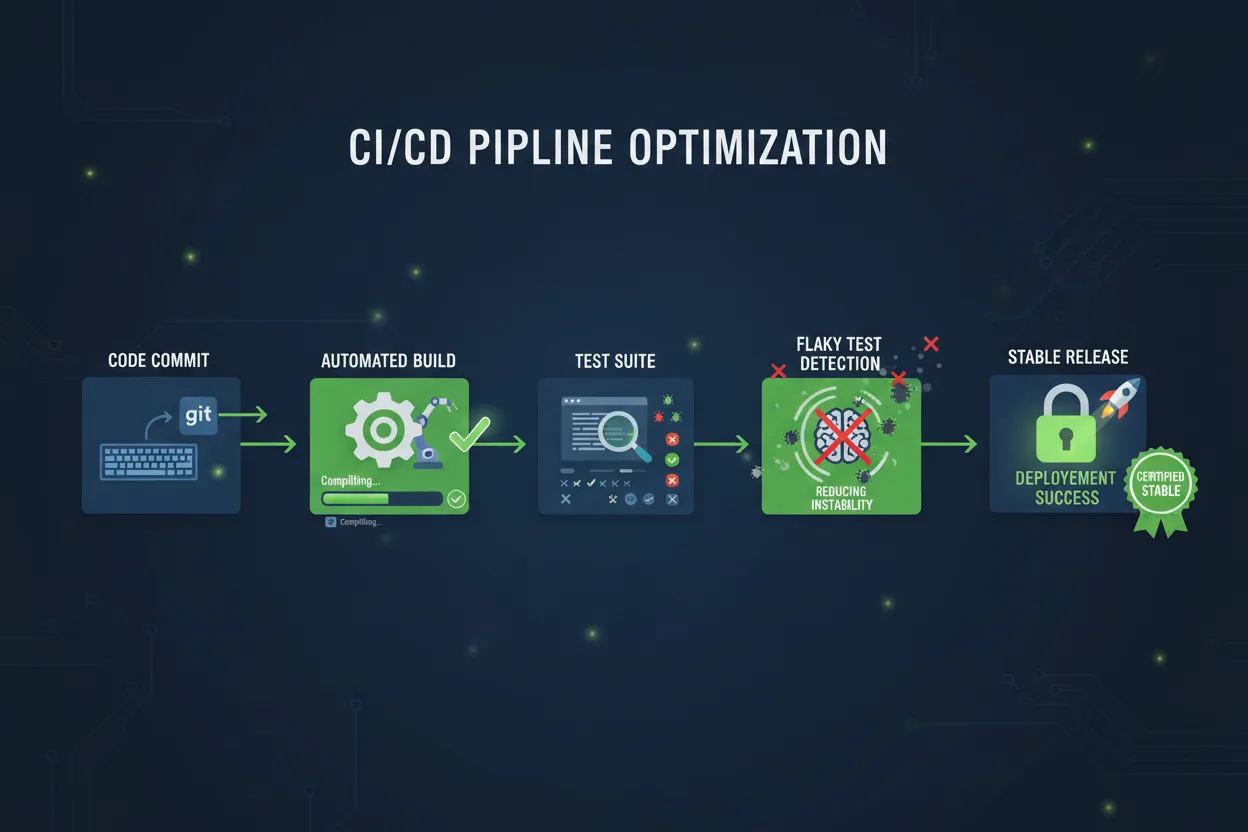
For any e-commerce or D2C brand, fast releases are your edge. But fast won’t work if your build is always blocked by random failures. This is why which process requires automated builds and testing is a real-world question, not a boring theory. When you automate your builds and tests, every pull request or commit is checked before it can break production. No more crossing fingers before a deploy.
But here’s the rub: all your automation is pointless if you’re just running a suite full of flaky tests. That’s where AI comes in, healing those failures on the fly and keeping your CI/CD moving. Even if all you had before was what is the simplest form of automation, AI-powered tools will upgrade your pipeline and make those random blockers a thing of the past.
AI's Role in Ensuring Reliable Continuous Releases
So how does AI actually fix your pipeline? First, it watches for flaky failures and flags them for repair. Then, it prioritizes which tests need updating—focusing on those that break most. According to industry data, this boosts your test suite’s efficiency by 35%. And brands using tools like Mabl have seen flaky test incidents fall by 60% after bringing AI into CI/CD. That means more shipping, less debugging, and fewer surprises after you launch.
AI also watches for risky code changes and can trigger extra regression tests if needed. Research shows AI-based regression can cut post-release bugs by 40%. If you’re a PM or growth lead, this means happier users and fewer late-night bug hunts. Bottom line: when you mix automated builds, smart scripts, and AI, you get steady releases with less firefighting every sprint.
Bottom line: AI automation testing is your best bet against flaky tests and slow releases. It boosts your software quality, speeds up shipments, and makes test results trustable again—whether you’re just doing what is the simplest form of automation or rolling out advanced AI tools. If you run a D2C brand and want to scale faster, what is ai automation testing is no longer a luxury—it’s the new normal. Reach out to Mommantum for proven solutions and expert help. You’ll never look at flaky tests the same way again. For more details, check Mommantum.
Ready to stop fighting flaky tests? If you want to boost test coverage, automate builds, or just get friendly advice about free ai test automation tools, our team at Mommantum is here to help. We’ll walk you through what works for your stack, from first scripts to AI-powered pipelines. Don’t let broken tests hold you back—move to smarter, stronger automation today.
Frequently Asked Questions
What is AI automation testing and how does it work?
AI automation testing is when you use machine learning and smart tools to create, run, and fix tests—all automatically. Instead of relying on people to spot broken scripts, AI handles it. So you get faster releases, fewer flaky bugs, and tests that fix themselves as your code changes. It’s a big step up from just basic scripting and saves heaps of time.
What is the simplest form of automation in software testing?
The simplest form is using scripts to repeat actions—things like Selenium running a login check. This takes “click and check” work away from humans and makes results repeatable. It’s the first step before you look at AI-driven tools. Once you’re good with scripts, AI can help fix and even write tests for you.
Are there free AI test automation tools available?
Yes! There are free ai test automation tools out there—Testim, Katalon Studio, Mabl, and more. They let you automate tests, spot flaky issues, and self-heal broken steps without blowing your budget. These tools are perfect if you want to try AI testing before paying for anything big.
How does AI automation testing compare to manual testing vs automation testing?
AI automation is much faster and more reliable than just manual testing. It spots flaky failures early, delivers results in less time, and cuts down on false positives. This means your team isn’t bogged down by daily triage, and you ship features more often. If you’ve only done manual testing or simple scripts, AI is the next natural upgrade for stability.
Which process requires automated builds and testing for reducing flaky tests?
Automated builds and testing are essential in CI/CD pipelines. This is where which process requires automated builds and testing really makes sense. Without automation, every release slows down and bugs slip by. With AI, your builds run smoother and flaky tests get fixed before anyone notices them in production.
How does AI actually fix flaky tests?
AI watches your test runs and spots steps that keep failing randomly. It then updates or rewrites those flaky steps on its own—this is called “self-healing.” So your tests don’t break every time the UI changes or when new data is added. Basically, AI keeps your suite green so you aren’t stuck fixing the same thing every week.
Does using AI testing really increase team productivity?
Definitely. With AI catching and fixing flaky tests, developers and QA don’t waste time chasing false alarms. That means more time coding, less time firefighting. People trust their test results more, so the whole team gets real confidence back in the build pipeline. Releases get faster and everyone’s less stressed.
Is AI-based automation testing worth it for smaller D2C brands?
Absolutely. You don’t need a giant team or budget to see wins from AI-powered testing. Even small brands can use free ai test automation tools to get better coverage, happier users, and fewer bugs in production. Start small, grow as needed—it pays off quickly.